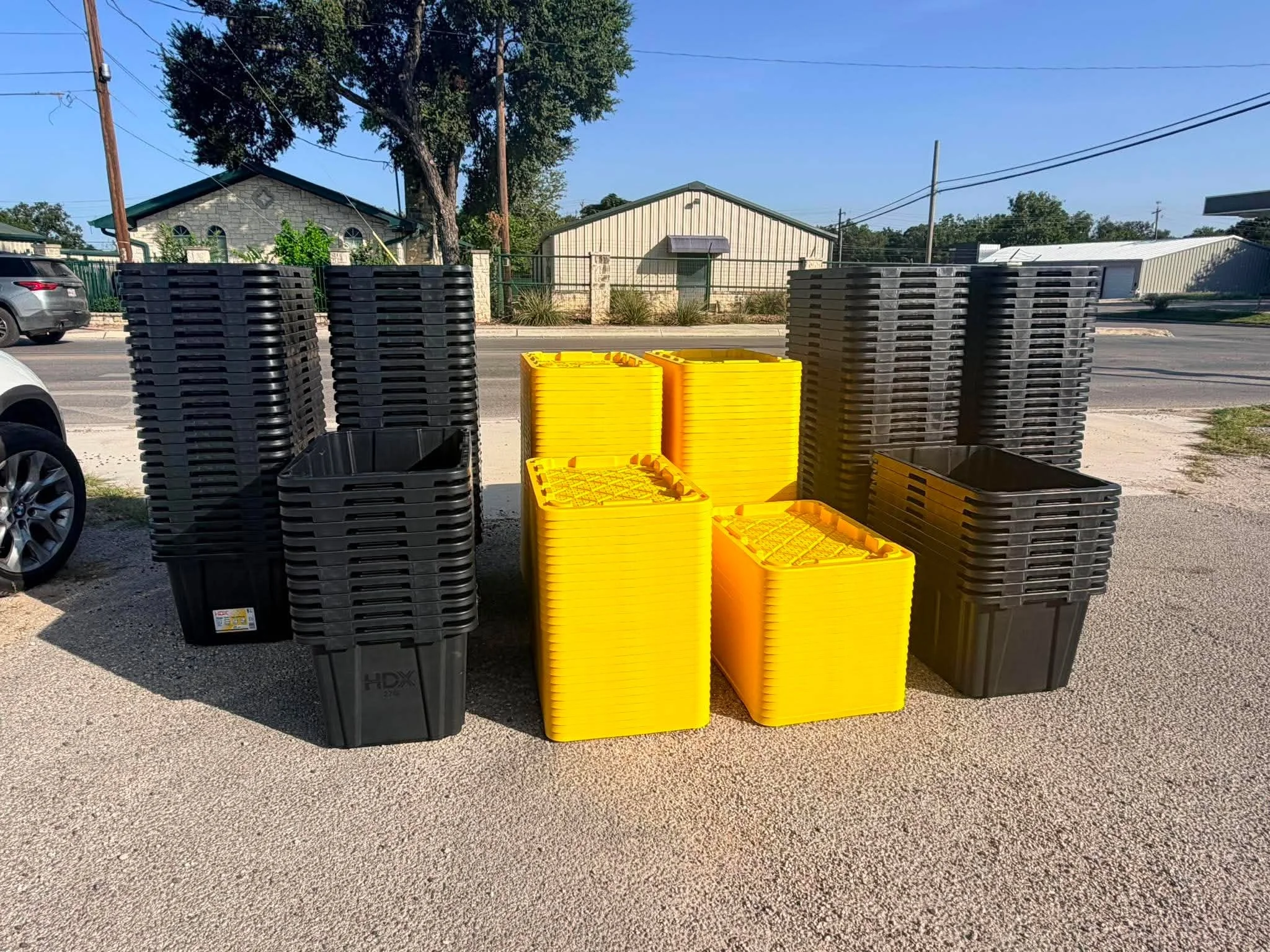
bins :the quiet assurance of containment after the flood
If this were published in a clinical journal, it might be described as a study in containment, organization, and psychological stabilization following disaster.
I would describe it differently.
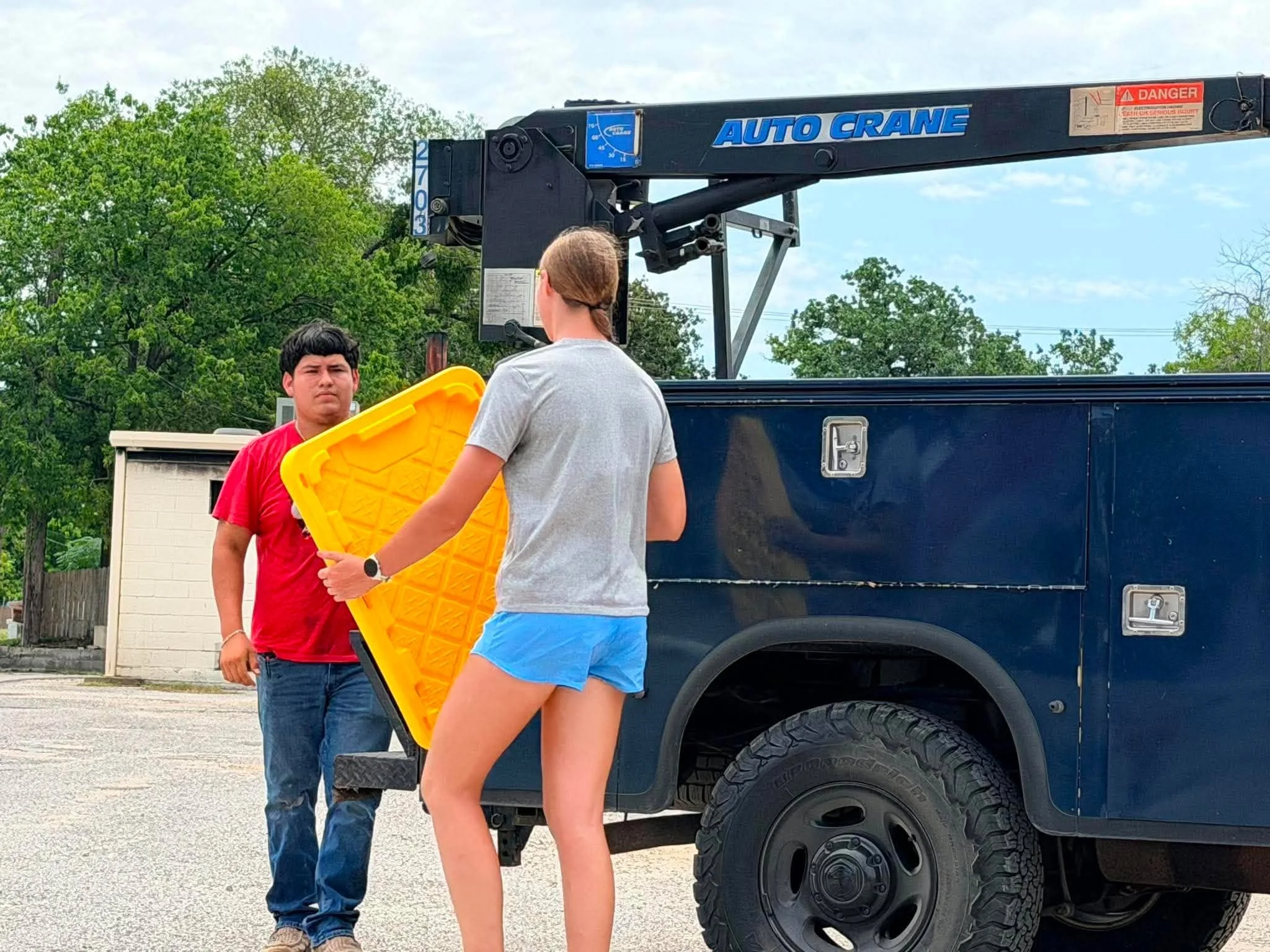
I would say that healing sometimes arrives disguised as a plastic bin with a yellow lid.
To someone passing by, it is an ordinary object—practical, inexpensive, stackable.
To someone standing in what remains of a flooded home, it becomes something else entirely.
Disaster scatters more than possessions. It scatters memory, routine, identity, and the hopeful belief that tomorrow will resemble yesterday. Long before a home is rebuilt, something less visible has to happen: the mind has to believe that order is still possible.
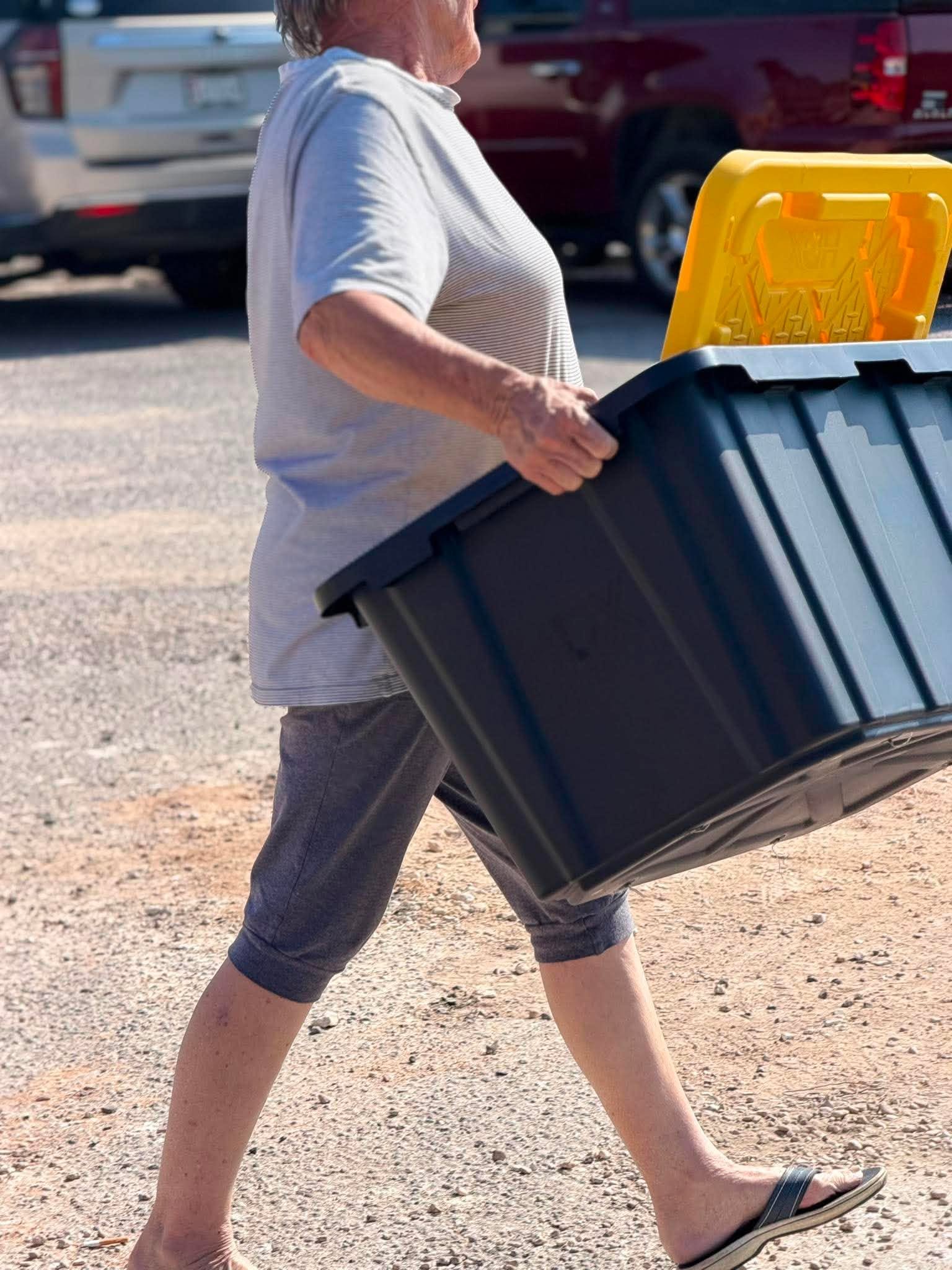
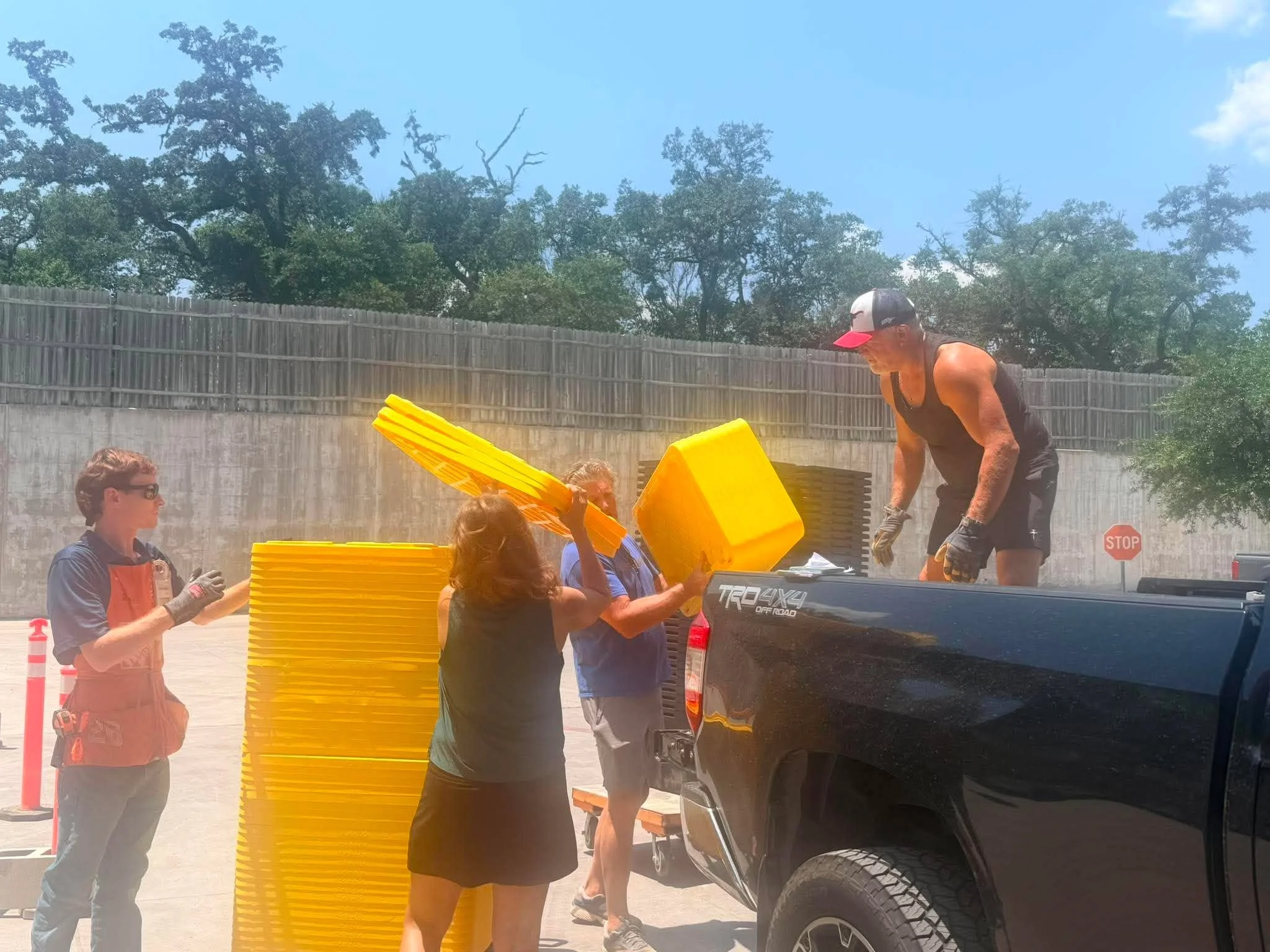
Last year, our bins became vessels of restoration. Family photographs rested beside heirloom quilts . Camp clothes soaked overnight in vinegar before moving through careful stages of cleaning. We documented, cleaned, organized, and protected what we recovered. When families came looking for their belongings, they were finding pieces of their lives that someone had carefully kept safe.
This year was different.
Many belongings stayed inside the homes or scattered into the yards. They had to be recovered, power-washed, disinfected, dried in the hot Texas sun, and stored because they could not go back inside the house yet. The bin became a temporary home until the home itself was ready again.
The same was true for the new things people received. Fresh towels. Children’s clothes. School supplies. Blankets. Everyday necessities given by people who simply wanted to help. Those things needed a clean place, away from mud, moisture, and contamination.
On paper, this is logistics.
In practice, it is psychology- even spirituality.
Trauma overwhelms the nervous system with disorder. When everything feels scattered, containment becomes a quiet assurance. It creates a boundary between what has been contaminated and what has been protected. It gives the mind one simple thing it can believe:
This is safe.
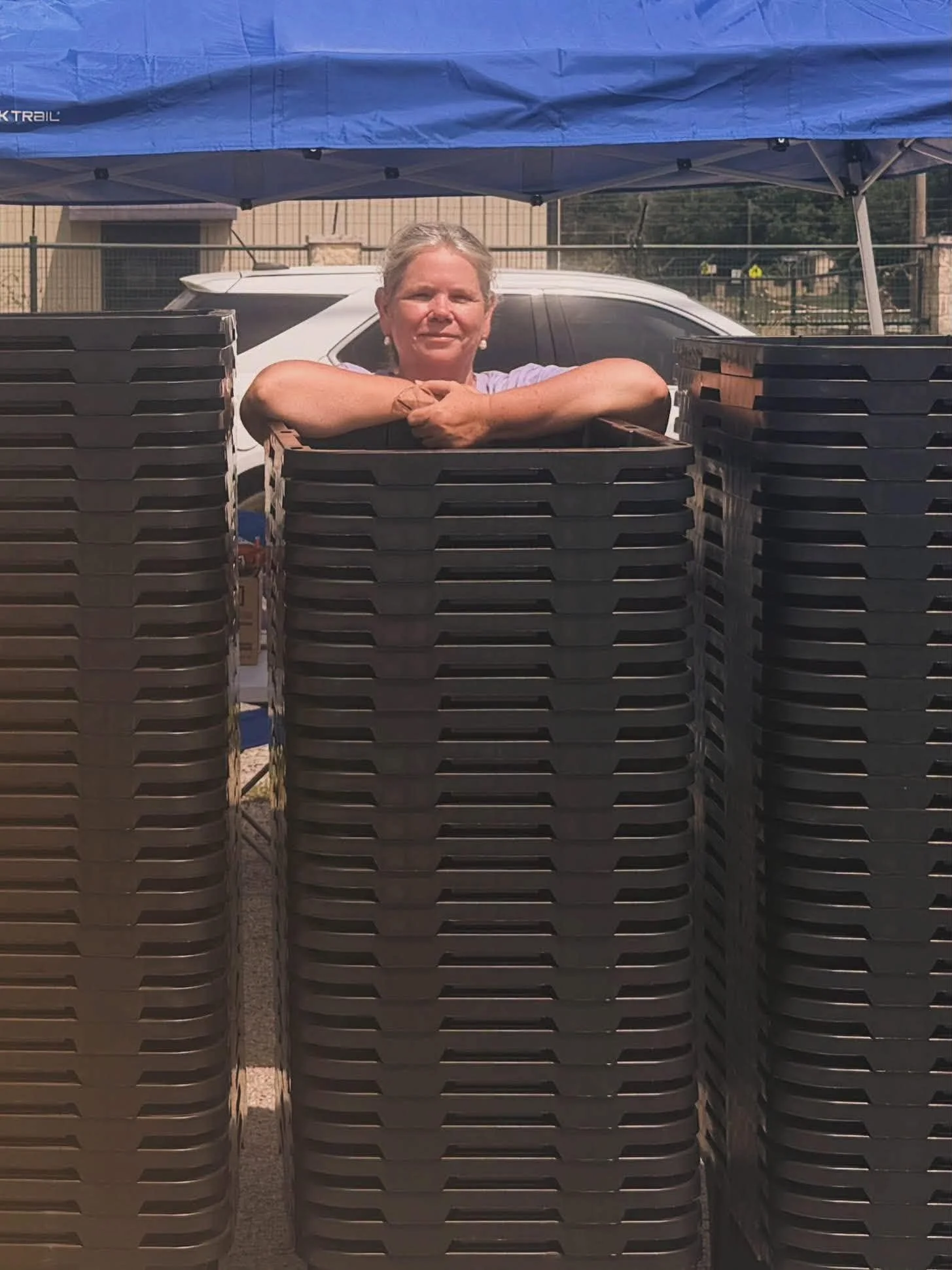
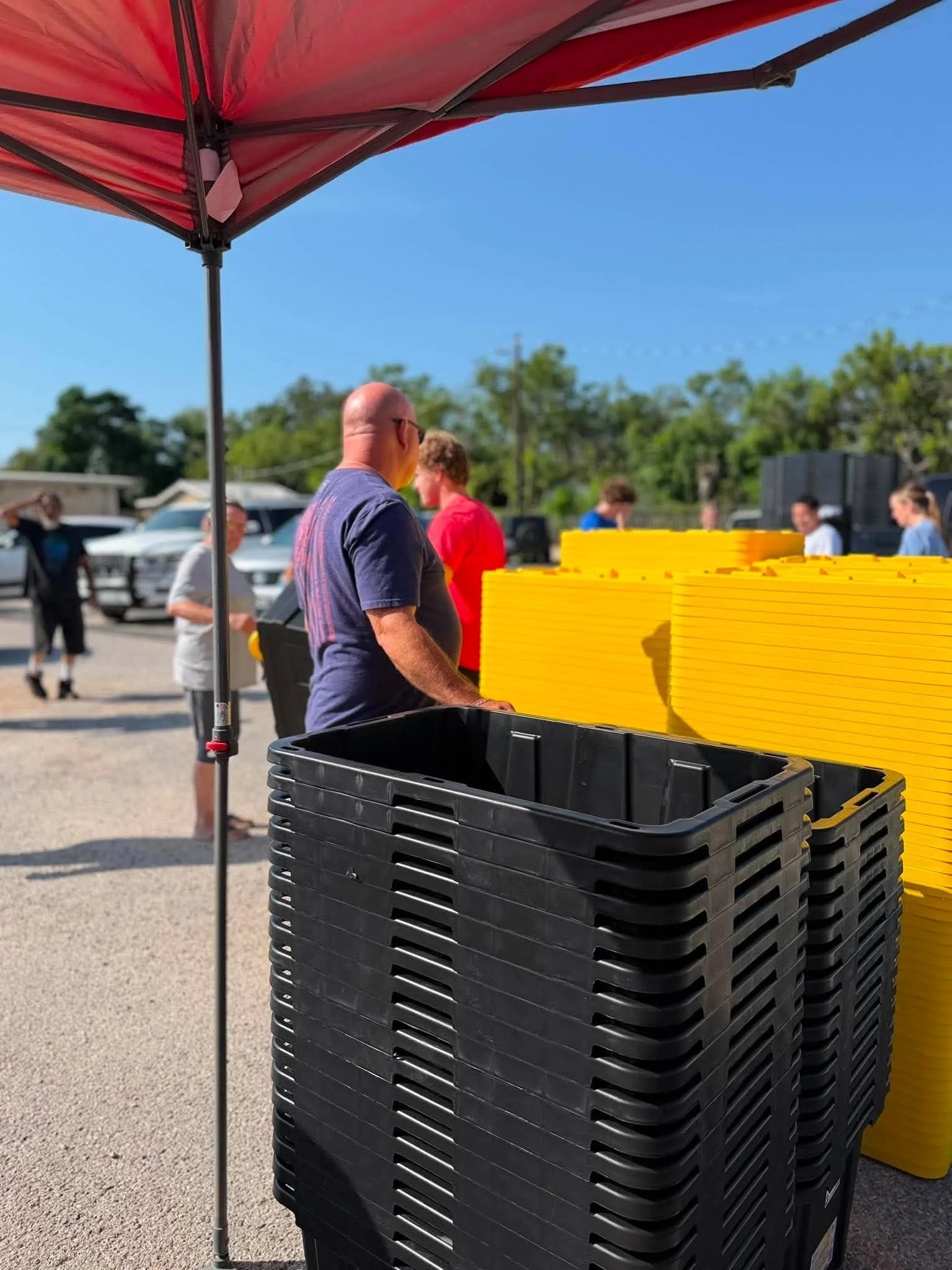
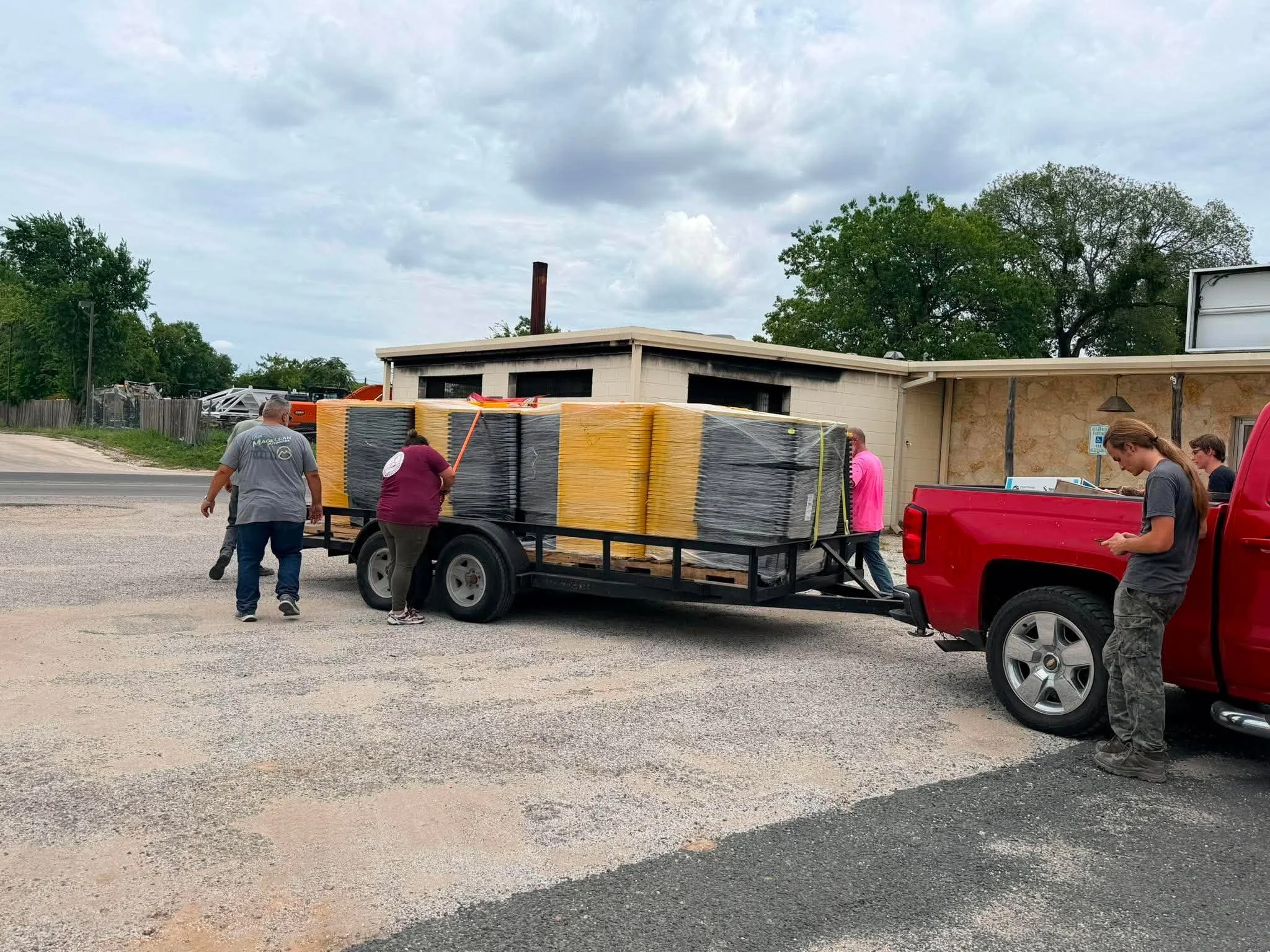
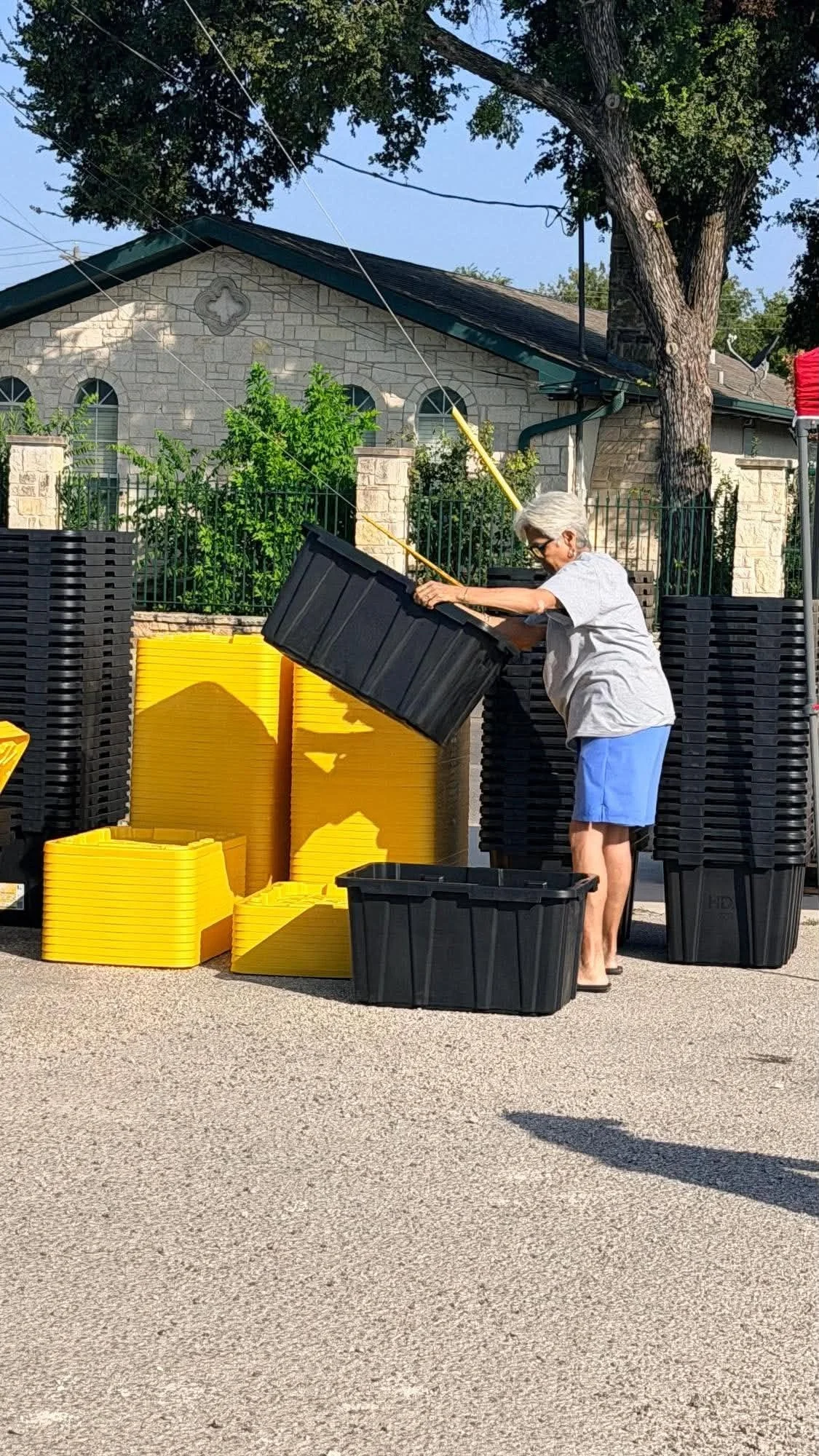
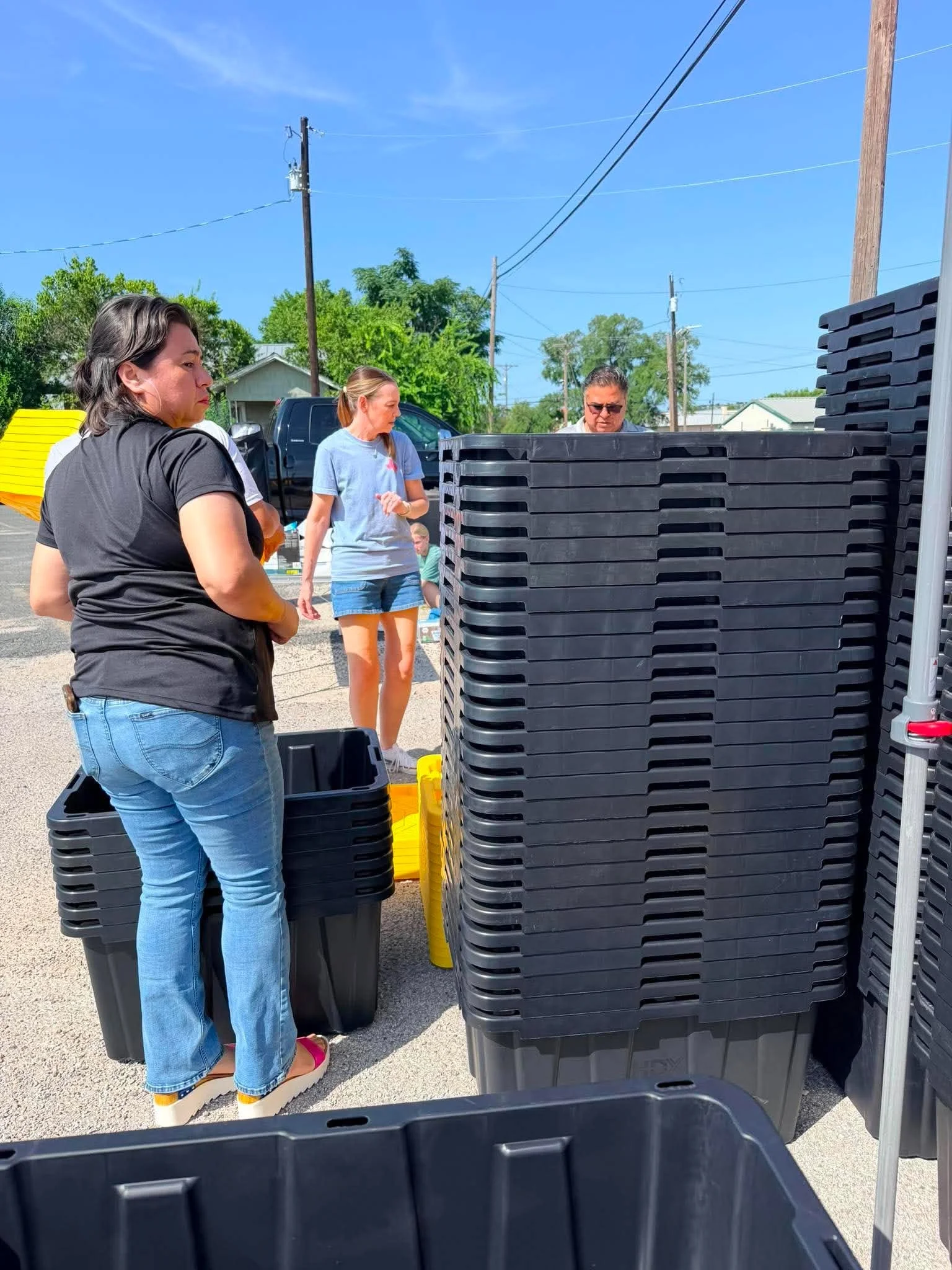
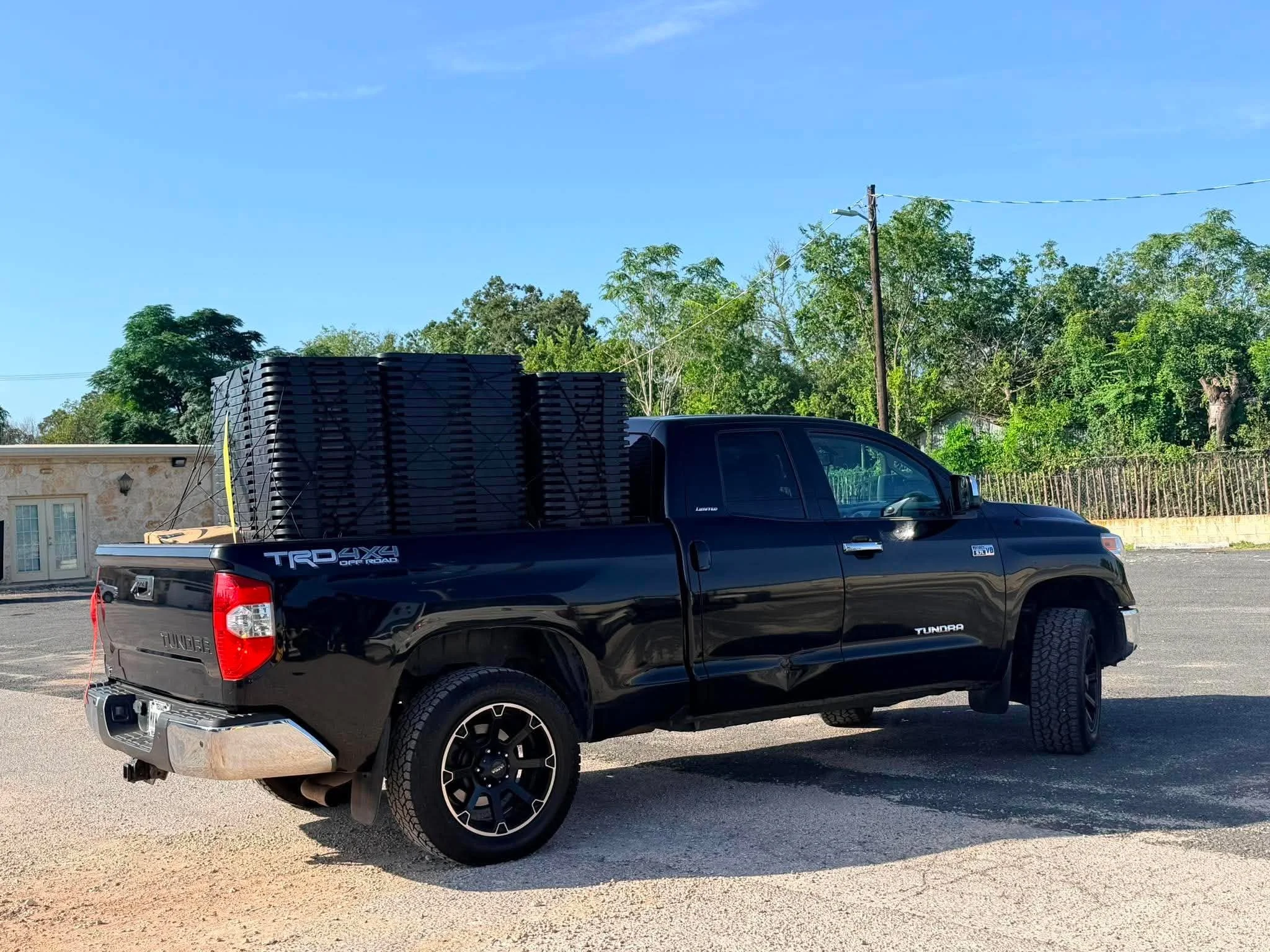
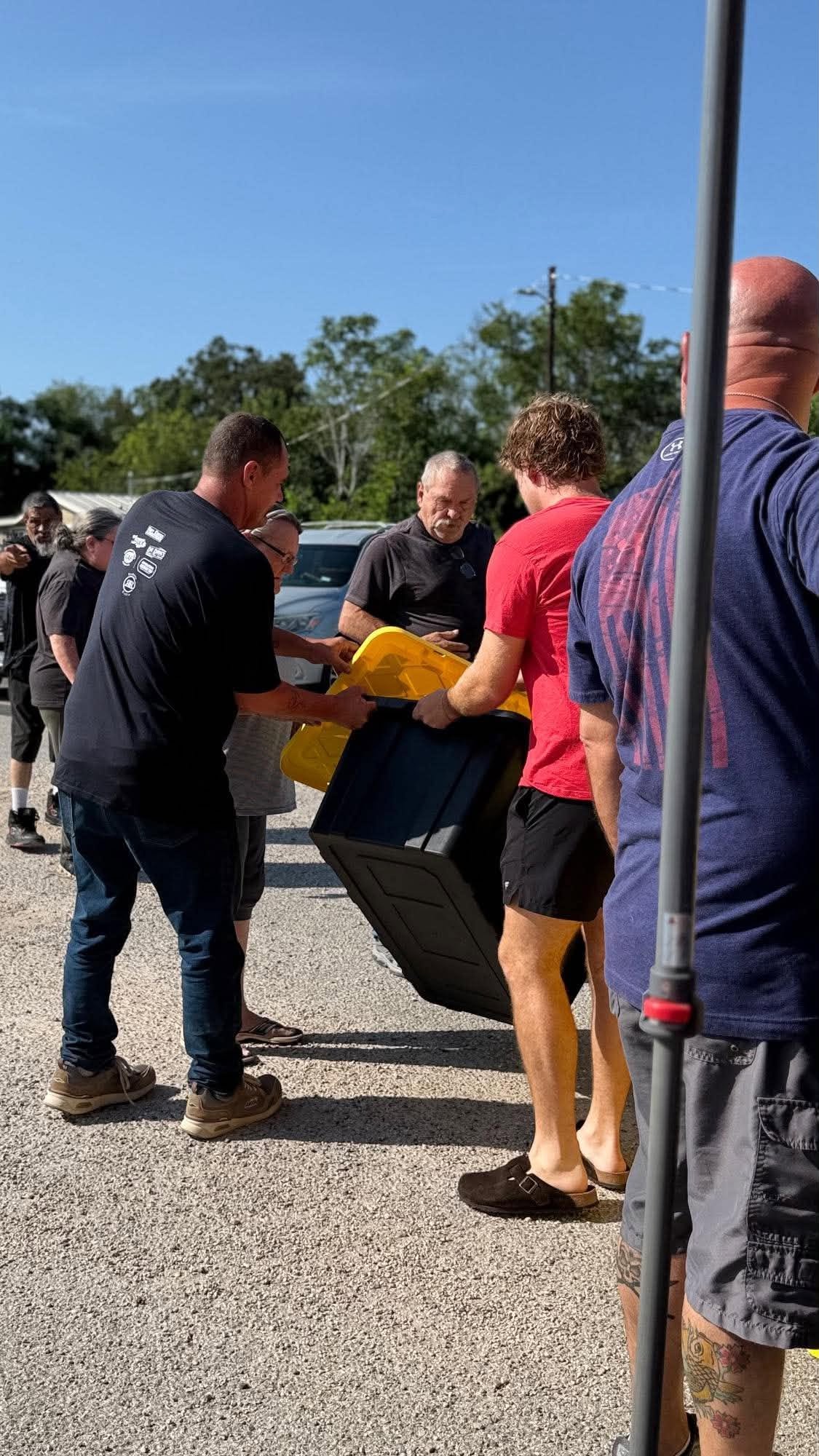
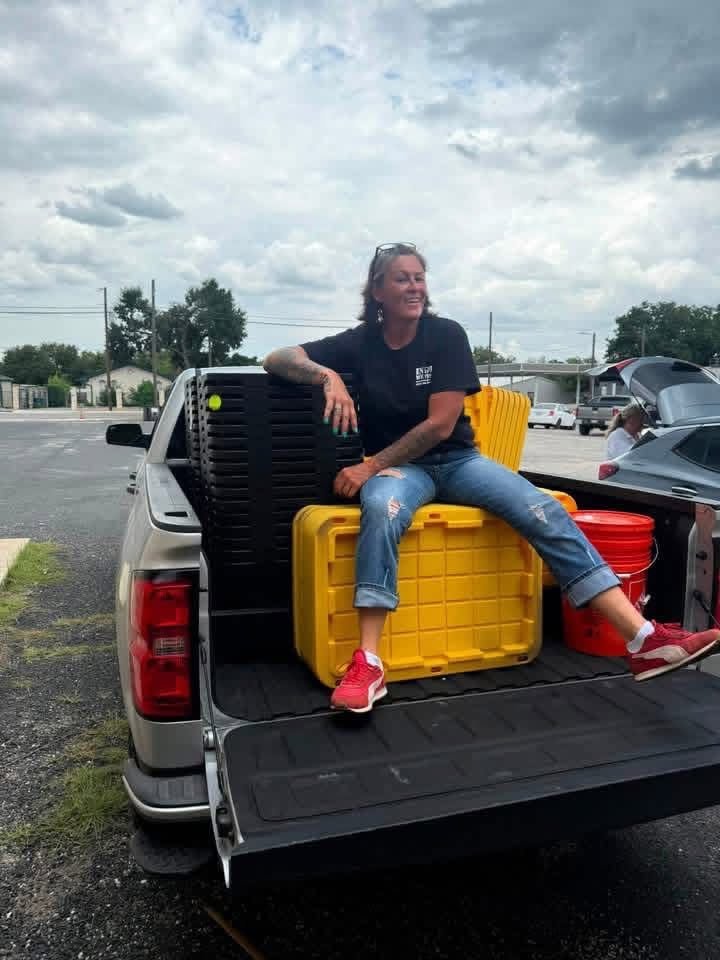
That is why bins became such an important part of our work. We’ve given away thousands of of them- and they remain the most requested item to date.
People are placing more than belongings inside them. They are placing part of the chaos somewhere they can manage it.
A flood survivor can point to a small part of an otherwise devastated world and say, “This part is okay.”And maybe, for a moment, they could believe that part of them was okay too.
After more than a year of walking beside this community, I have come to understand that disaster recovery begins by making space. Space for grief. Space for memory. Space for the pieces of a life that still matter.
Sometimes that space is emotional.
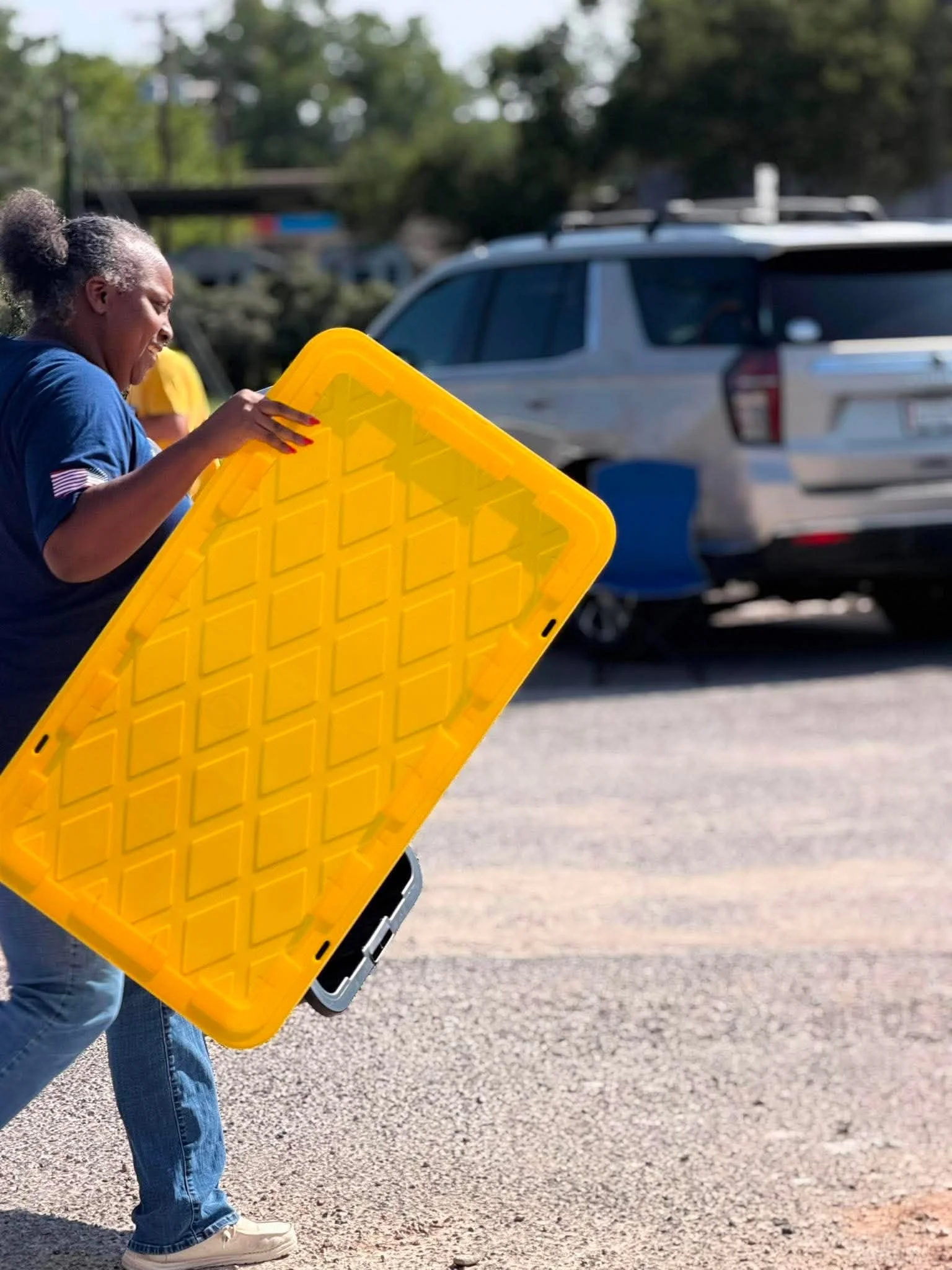
Sometimes it is a plastic bin with a yellow lid.
Containment is more than storage. It is a form of safety. It gives the scattered things a place to belong and gives chaos a boundary.
I think that in its simplest form, a bin says what people often need to hear most:
You don’t have to carry this anymore.
I’ll hold it for a while.
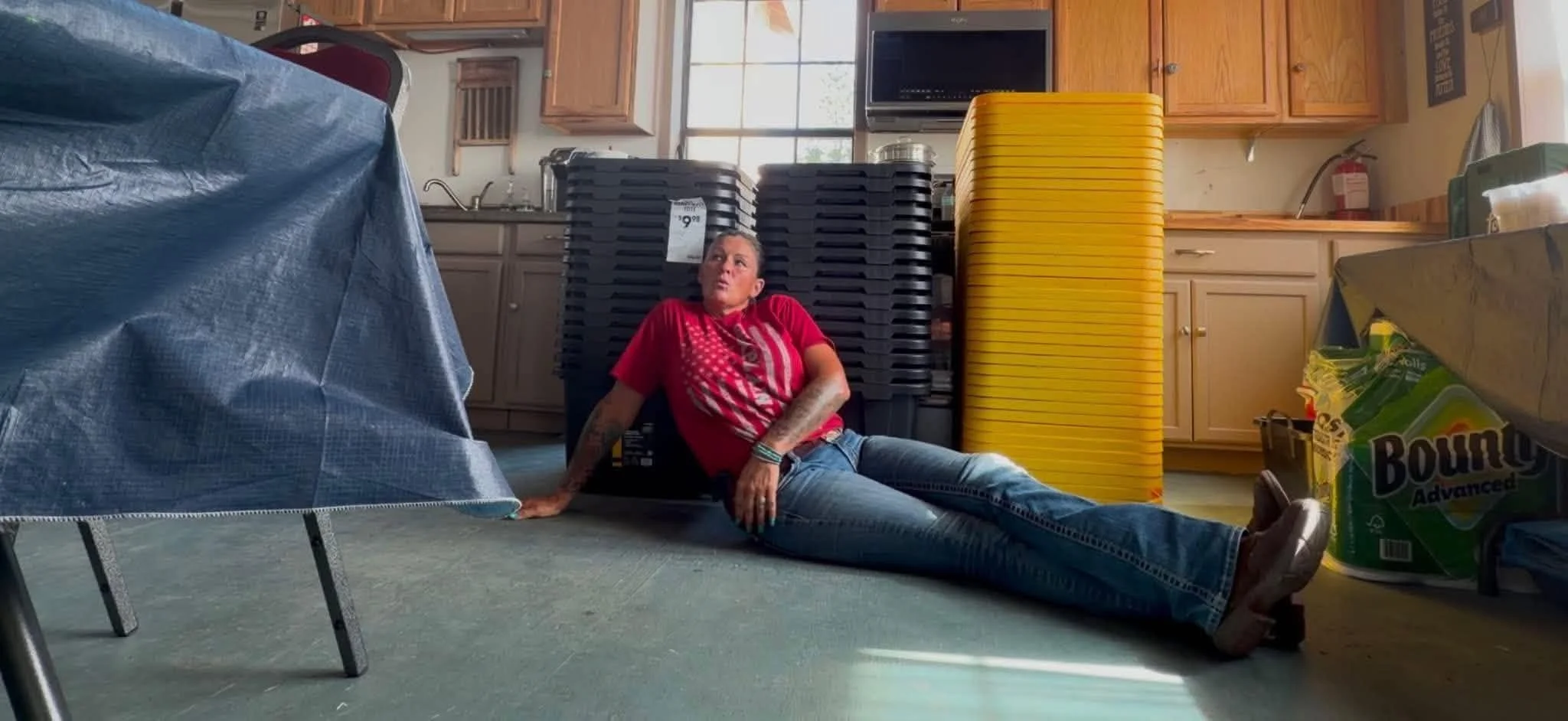
photo Sandi Gilmer Chainsaw Chaplain